Centralized Storage Facility for Spent Radiation Sources

In order to solve the problems of improper storage of spent ionizing radiation sources (SIRS) at the enterprises of the “Association “Radon”, which does not comply with the best international practice, and to switch to their centralized long-term storage, it was decided to build a centralized long-term storage facility for spent ionizing radiation sources (CLTSF).
CLTSF was constructed in the exclusion zone at the Vector site with international technical assistance provided by Department of Energy and Climate Change of the United Kingdom of Great Britain and Northern Ireland, as well as the European Commission.
CLTSF is designed for acceptance, characterization, sorting, certification and further separate long-term storage for 50 years of spent sources of alpha, beta, gamma and neutron radiation before their transfer to disposal. It is planned to transport SIRS in the amount of up to 500,000 units from the enterprises of the “Association “Radon” to the storage facility.
The storage facility building houses a conditioning installation and a source storage area, where tubular and modular type storages are located.

Figure 1 – Centralized storage of spent radiation sources
The storage provides for management of 5 flows of sources (Figure 2):
- flow 1 (green): RITEG (beta sources) with a total activity of 2.7x10¹⁶ Bq;
- flow 2 (yellow): BGI and E (gamma sources);
- flow 3 (blue): neutron sources with a total activity of 1,1х1014 Bq;
- flow 4 (red): other high-level sources with a total activity of 3.8x10¹⁵ Bq;
- flow 5 (turquoise): other low-level sources with a total activity of 3.7x10¹³ Bq.
Flow 1
RITEGs are delivered to the storage facility by special vehicles and are placed for storage in a specially designated storage area without processing.
Flow 2
From the acceptance area, the BGI and E sources are delivered to the room for preliminary processing to loosen the clamps on the housing. After that, they are delivered to the hot chamber A, where, using parallel manipulators, the sources are removed from the housings. Then using parallel manipulators the sources are transferred through a special door in the chamber wall to the hot chamber B, where they are characterized and sorted. In the hot chamber C, the sources are placed in capsules, which are screwed with lids and placed in special metal cups with plugs, which are delivered to the appropriate storage compartments of tubular type by means of an automated reloading complex.
A separate certificate is drawn up for each capsule with a source that is transferred for long-term storage. The computerized database provides for an automatic comparison of the source characterization results with the data in the certificates.
Flow 3
From the acceptance area, the neutron sources are delivered to the hot chamber B, where they are characterized and sorted. In the hot chamber C, neutron sources are placed in containers, which are delivered to a special pit in the storage area using an automated reloading complex.
Flow 4
From the acceptance area, the high-level sources are delivered to the hot chamber B, where they are characterized and sorted. In the hot chamber C, high-level sources are placed in containers, which are transported by crane to the appropriate storage compartments.
Flow 5
After delivery, low-level sources are transferred to the glove box, where they are characterized and placed in special containers, which are then placed in a special pit of the storage area.
After the expiration of the storage period, the sources should be retrieved from the storage facility and disposed.
During long-term storage of sources, the condition of packages with sources, the condition of equipment and mechanisms, humidity and condensation formation, and radiation environment are monitored.

Figure 2 – Scheme of SIRS management
The transfer of sources to the storage facility is carried out as follows:
- batches of sources are formed and certificates are drawn up for them at the enterprises of the “Association “Radon”;
- acceptance and transfer of batch of sources between the enterprises of the “Association “Radon” and CLTSF is carried out according to the agreed procedure;
- in the acceptance area, the incoming inspection of sources is carried out for compliance with the criteria for acceptance for storage and for damage during transportation;
- when passing the incoming inspection, the sources are either transferred further along the chain of technological process, depending on the type of source, or are temporarily stored in the room for temporary placement of containers with sources;
- when any inconsistencies are identified, a special decision is made on what to do next with the source.

Figure 3 – Storage area (on the left - BGI and E sources, on the right - containers with neutron sources)
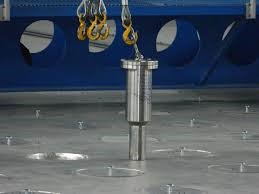
Figure 4 – Placement of cup with capsule with SIRS
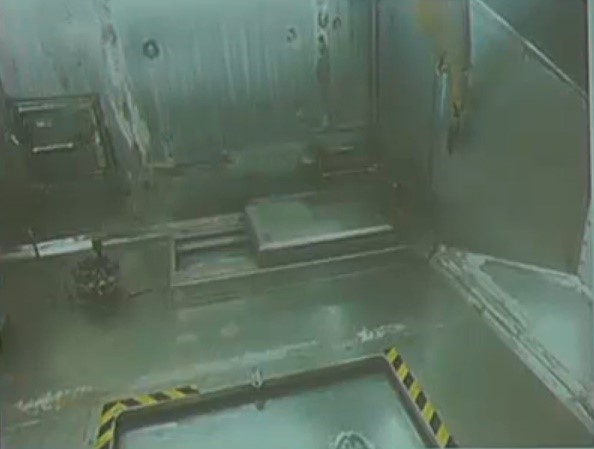
Figure 5 – Hot chamber
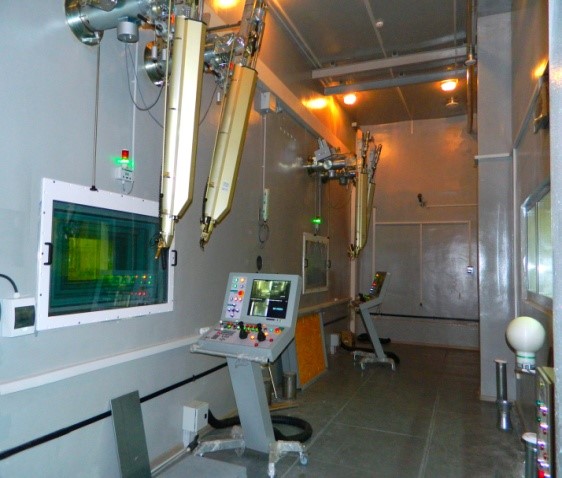
Figure 6 – Control room of hot chamber with manipulators
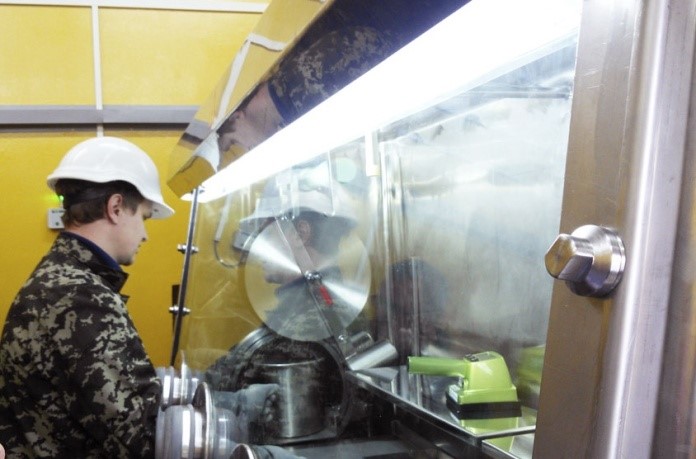
Figure 7 – Glove box
In 2019, the “hot” tests were carried out with active spent ionizing radiation sources in order to test the technology for their management in the storage facility, the results of which revealed a number of shortcomings.
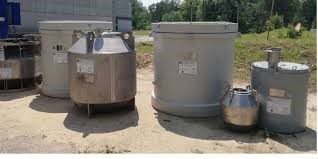
In the same year, as part of an international project implemented within the framework of agreement between Ukraine and the United States to assist Ukraine in eliminating strategic nuclear weapons and preventing the proliferation of weapons of mass destruction, 28 containers for SIRS transportation and storage, 4 cranes for sources reloading and 5 biological shields were handed over to the “Association “Radon” and CLTSF.
In these containers, the spent sources will be accepted at the enterprises of the “Association “Radon”, from where, after the formation of the batch, they will be sent to CLTSF. The containers were manufactured in Ukraine by NT-Engineering company.
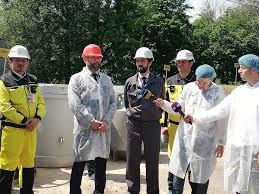
On July 2, 2020, an online meeting was held at SAUEZM with the participation of representatives of the SSE “CRWME”, the SNRIU, the Science and Technology Center in Ukraine and the UK Government Department for Business, Energy and Industrial Strategy. During the meeting, the Ukrainian and British sides discussed the current situation regarding the licensing of CLTSF, as well as the list of equipment that needs to be supplied to complete the stage of “hot” tests and transfer the storage facility to commercial operation.