Very low-level radioactive waste
The classification of radioactive waste usually has several purposes. The point of view of the international community is set out in the IAEA document “Classification of Radioactive Waste, General Safety Guide No. GSG-1”, namely:
defining the limits of various categories of waste in terms of ensuring the long-term safety during disposal;
facilitating and simplifying waste processing, increasing the efficiency and safety;
improving the safety of waste storage and transportation.
The IAEA document presents a system of radioactive waste classification, in which radioactive waste is divided into 6 categories in terms of long-term safety during disposal:
1) Waste exempt from regulatory control.
2) Very short-lived waste.
3) Very low-level waste.
4) Low-level waste.
5) Intermediate-level waste.
6) High-level waste.
Very low-level waste is waste that does not necessarily meet the criteria for exemption from regulatory control, but that does not need a high level of containment and isolation and, therefore, is suitable for disposal in near surface disposal facilities (landfill) with limited regulatory control.
A sufficient level of safety for very low-level waste may be achieved by its disposal in engineered surface landfill type facilities. This is the usual practice for waste from some mining operations, as well as waste containing natural radionuclides from various operations related to minerals processing and other activities.
Near surface facilities for disposal of very low-level waste are operated in many countries.
In Sweden, such disposal facilities are available at all NPPs, except for the Barsebäck NPP, since the site conditions were not suitable for the disposal facility location.
In France, all very low-level waste is located in the CIRES centralized disposal facility, which has a capacity of 650,000 m3 of waste.
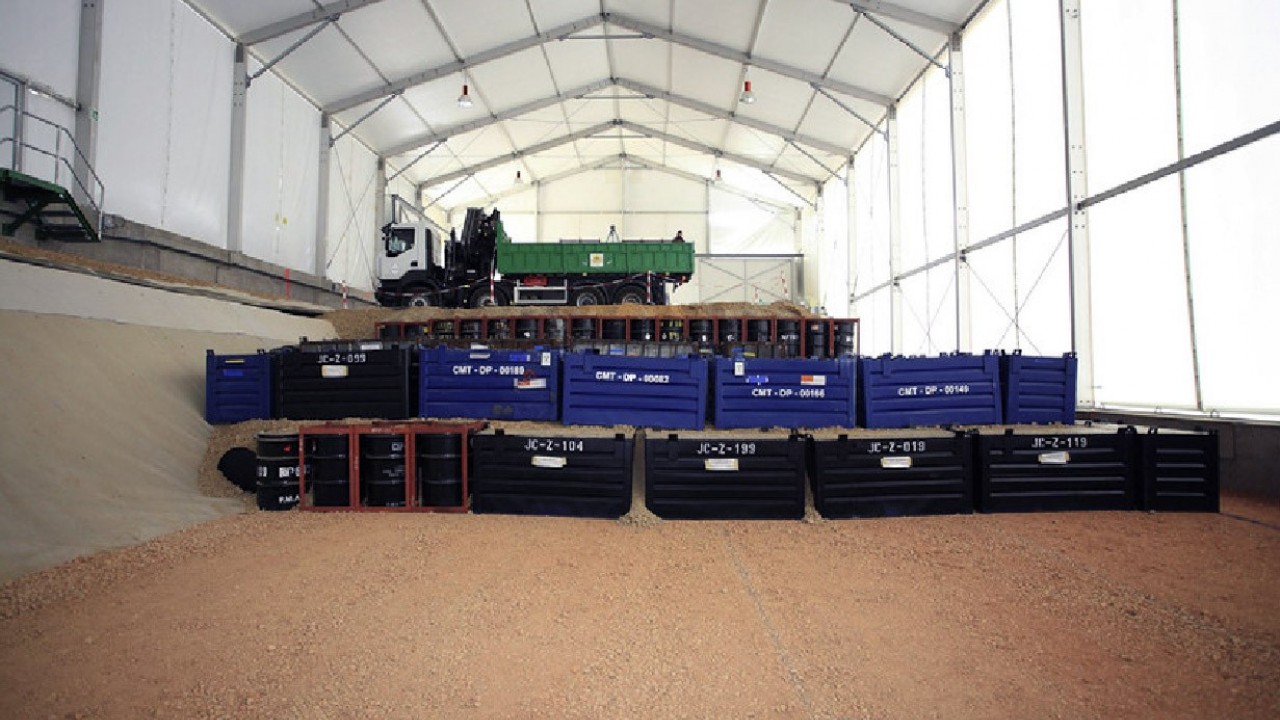
In Spain, the disposal of such waste is carried out at El Cabril centralized disposal facility, which has existed since 1992. However, a special area for disposal of very low-level waste appeared in it only in 2008. It consists of 4 compartments with a capacity of 130,000 m3 for waste from the decommissioning of nuclear installations. The compartment for disposal is a recessed trench equipped with several layers of drainage and waterproof materials, which, after filling, is covered with protective layers, including gravel, clay, soil and vegetation cover.
Until recently, the classification of radioactive waste in Ukraine was based on the old Soviet approach with the division of waste into three classes by activity: low-level, intermediate-level and high-level.
This division into classes led to the fact that for radioactive waste with activity concentration levels at or slightly higher than the levels established for the exemption of material from regulatory control, the requirements and rules for more active and hazardous wastes were applied. This led to an unreasonable increase in the filling of facilities for disposal of low- and intermediate-level radioactive waste and significantly increased the cost of storage and disposal of waste.
On October 17, 2020, the Verkhovna Rada of Ukraine adopted the Law “On Amendments to Certain Laws of Ukraine Concerning the Improvement of Legislation on Radioactive Waste Management”, which amended the following laws:
- “On the Use of Nuclear Energy and Radiation Safety”;
- “On Radioactive Waste Management”;
The Law, in particular, introduced four classes into which radioactive waste is divided:
very low-level waste; low-level waste; intermediate-level waste; high-level waste.
In addition, the facility for radioactive waste disposal is determined depending on their classification:
surface; near surface; at medium depths; geological.
Thus, it is surface storage that corresponds to very low-level waste.
The Law brings Ukrainian legislation on radioactive waste management closer to international legislation and comes into force two years after its publication, namely, in October 2021.
The need to create in Ukraine a facility for disposal of very low-level waste has long been brewing up, given the significant volumes of such waste, for example, during decommissioning of nuclear power plants, extraction of certain mineral resources, restoration of territories from radioactive contamination, and the like.

Filling the very low-level waste compartment in El Cabril (Spain)
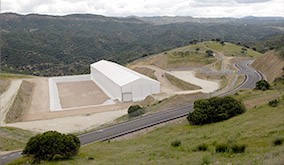
Location of very low-level waste disposal facility in El Cabril (Spain)