Liquid radioactive waste treatment in mobile modular installations

In Ukraine, there is an urgent need for the treatment of liquid radioactive waste in places of their formation, in particular in gas production, which is accompanied by the formation of a significant amount of associated stratal water contaminated with radionuclides of natural origin: radium-226, radium-228, thorium-232.
Typically, such associated stratal water is stored in large tanks. During long-term storage in tanks, radioactive sludge and layers are formed, the level of gamma radiation from the tanks sometimes increases to several tens of μSv/h, which requires appropriate management in accordance with the norms and rules on nuclear and radiation safety.
One of the ways to solve this problem is to pump out radioactively contaminated associated stratal water and sludge from tanks and to treat them on site.
Treatment should be comprehensive, combining, for example, various methods of purification of radioactively contaminated water and sludge (evaporation, filtration, sorption, electrodialysis, etc.) with subsequent solidification of the final product by cementation to convert it into a form suitable for long-term storage and/or disposal. In this case, the water purified from radioactive contamination can be pumped back into the rock layers in accordance with the sanitary standards for discharges into the environment [1].
One example of evaporation of sludge, liquid concentrate, etc. in 200 l drums is a mobile installation of DOT 17C model of the US Department of Transportation [2].
The operating principle of the installation is as follows (Figures 1 and 2). Liquid or liquid sludge, which needs to be treated, is pumped from the top into a 200 l drum directly from the tanks. The filling level of the drum is controlled automatically by a sensor. Electric heating elements (shells) are mounted on the drum, which supply heat to the contents of the drum. Electric heating elements operate from 230 V network and in the temperature range from 120 to 230 °C. A thermocouple sensor monitors the temperature of the steam and air leaving the drum. A vacuum valve controls the pressure in the drum. As soon as the temperature of the liquid or liquid sludge in the drum rises to a temperature of 70 °C, the pressure in the drum is reduced to ~ 0.3 atm. by means of the vacuum pump that leads to a rapid transition of liquid to steam. Once the sludge is drained, the drum is heated further to the operating temperature range to ensure complete removal of any remaining liquid.
Samples are taken from the formed condensate for analysis, according to the results of which the condensate is either dumped into the environment or returned back to drums as liquid radioactive waste.
During the operation of the installation, radiation monitoring is carried out.
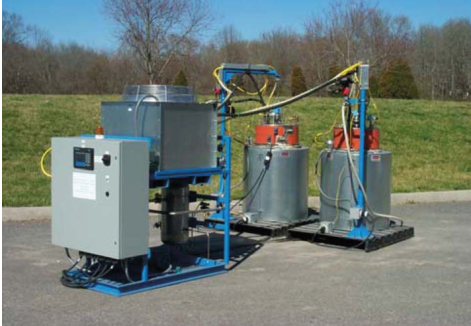
Figure 1 – Mobile evaporator installation in configuration with two barrels
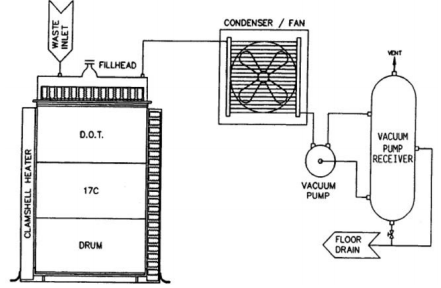
Figure 2 – Schematic operating principle of mobile evaporator installation
The mobile evaporator installation has the following advantages:
ease of installation and maintenance;
relatively low cost;
automatic control of evaporation process;
minimal operator involvement;
flexible mode of operation (continuous or intermittent);
capacity from 7.5 to 11.5 l/h;
100% moisture removal;
volume reduction ratio: 5:1 for sludge, 100:1 for liquids;
liquid purification factor up to 1000;
final product of treatment has a solid form.
To ensure compliance with the criteria for acceptance for storage and/or disposal, the final product can be additionally cemented directly in the drum.
References
Norms of Radiation Safety of Ukraine (НРБУ-97).
Mobile processing systems for radioactive waste management. IAEA Nuclear Energy Series. No. NW-T-1.8. Vienna, 2014.